

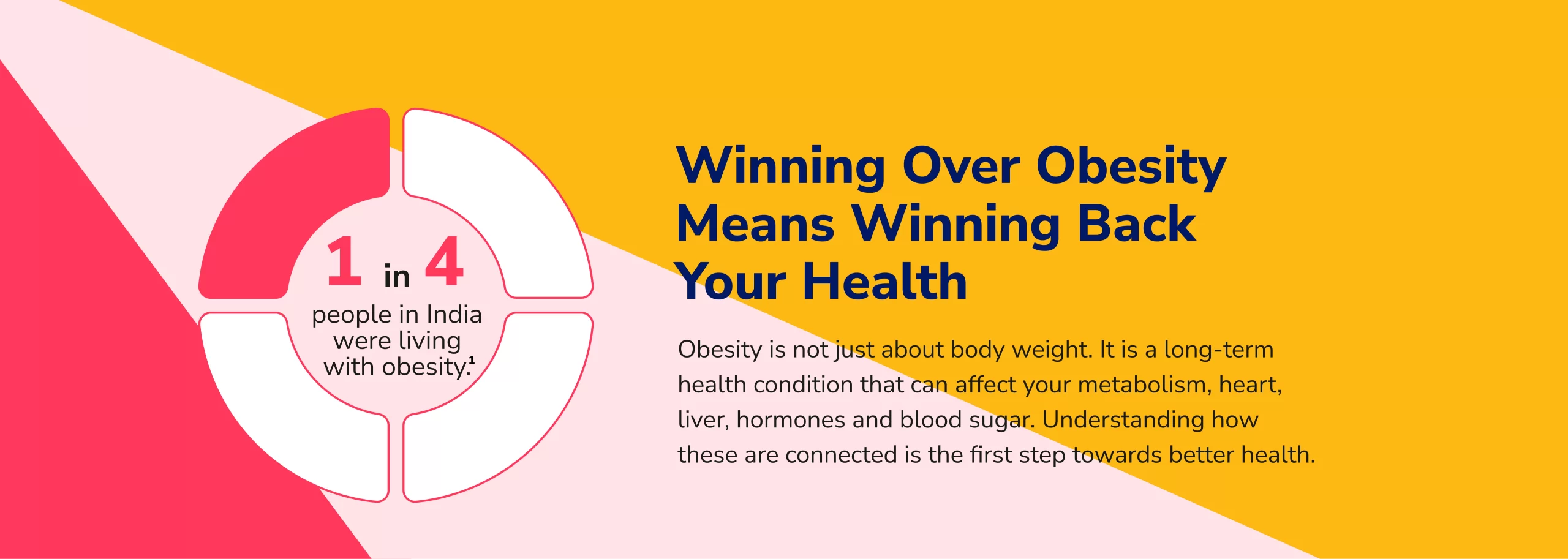
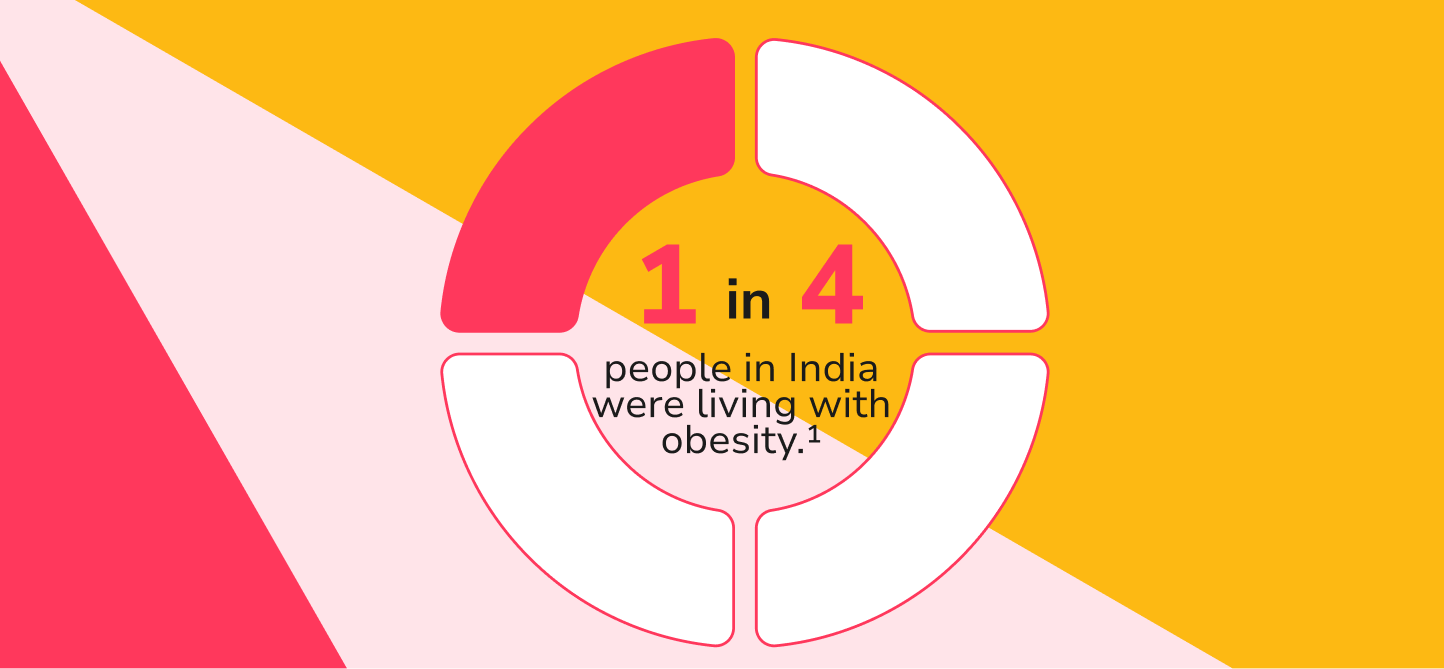


Obesity is not just about body weight. It is a long-term health condition that can affect your metabolism, heart, liver, hormones and blood sugar. Understanding how these are connected is the first step towards better health.
Obesity is a chronic, relapsing disease arising from complex interactions between genetics, neurobiology, eating behaviours, access to healthy diet, market forces, and the broader environment.
In the last decades, obesity has expanded globally as countries have experienced greater food security, socioeconomic development, and shifts in diet, physical activity, and societal and individual behavior driven by globalization and industrialized food systems.
More than 1 billion people living with obesity and prevalence
rising in nearly every country
WHO defines overweight and obesity as outlined below.
Overweight and obesity result from an imbalance of energy intake (diet) and energy expenditure (physical activity). In most cases obesity is a multifactorial disease due to environmental and psycho-social factors and genetic variants.
Use our tools to better understand your health and assess your risk levels
Anti-fat bias
Associates overweight individuals with traits like laziness, lack of willpower, and incompetence — regardless of actual weight status
Media portrayal
Often links higher body weight with personal failure & lack of intelligence or self-control
Widespread bias
Both in the general public and healthcare professionals have with negative attitudes toward people with obesity
Dehumanization
People with Obesity are perceived as less evolved or human as per studies
Self-identification
Linked to poorer mental and physical health outcomes

Stigma is linked to depression, anxiety, low self-esteem, and even suicidal thoughts

Health conditions such as high BP & insulin resistance, and is associated with disordered eating patterns like binge eating and weight cycling

Fear of judgment can lead people to avoid seeking medical care, which hinders obesity prevention and treatment

Leads to social isolation, poorer quality of relationships, & economic disadvantages
Women with PCOS often find it harder to lose weight. PCOS can make the body less sensitive to insulin, causing more insulin and male hormones to build up in the body. This can lead to weight gain, especially around the stomach. Abdominal fat can further worsen PCOS symptoms and increase the risk of diabetes, high BP and heart disease.
This can also worsen symptoms like irregular periods, acne and difficulty getting pregnant.
The good news is that even a small amount of weight loss can help. Losing just 5–10% of your body weight may:


Metabolic dysfunction-associated steatotic liver disease (MASLD) is when fat builds up in your liver because of extra body weight, high blood sugar, high cholesterol, or high blood pressure. It used to be called nonalcoholic fatty liver disease. Obesity may be the most common cause of this disease.
Metabolic dysfunction-associated steatotic liver disease can happen without causing any symptoms.
Blood tests and imaging tests, such as a CT scan and ultrasound, can help diagnose it.
Losing weight and making other lifestyle changes can help control and even reverse this disease.
Symptoms of MASLD are:


Effective obesity management requires sustained lifestyle changes and continuous support.
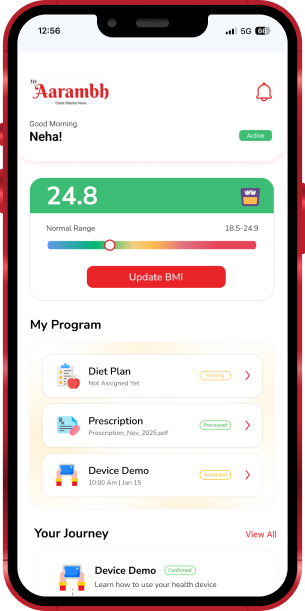
MyAarambh supports patients by:

Improving awareness and understanding of healthy weight management

Encouraging regular tracking of weight and health progress

Supporting sustainable lifestyle modifications (nutrition and physical activity)

Promoting adherence to personalised care plans

Providing ongoing guidance and motivation throughout the journey